

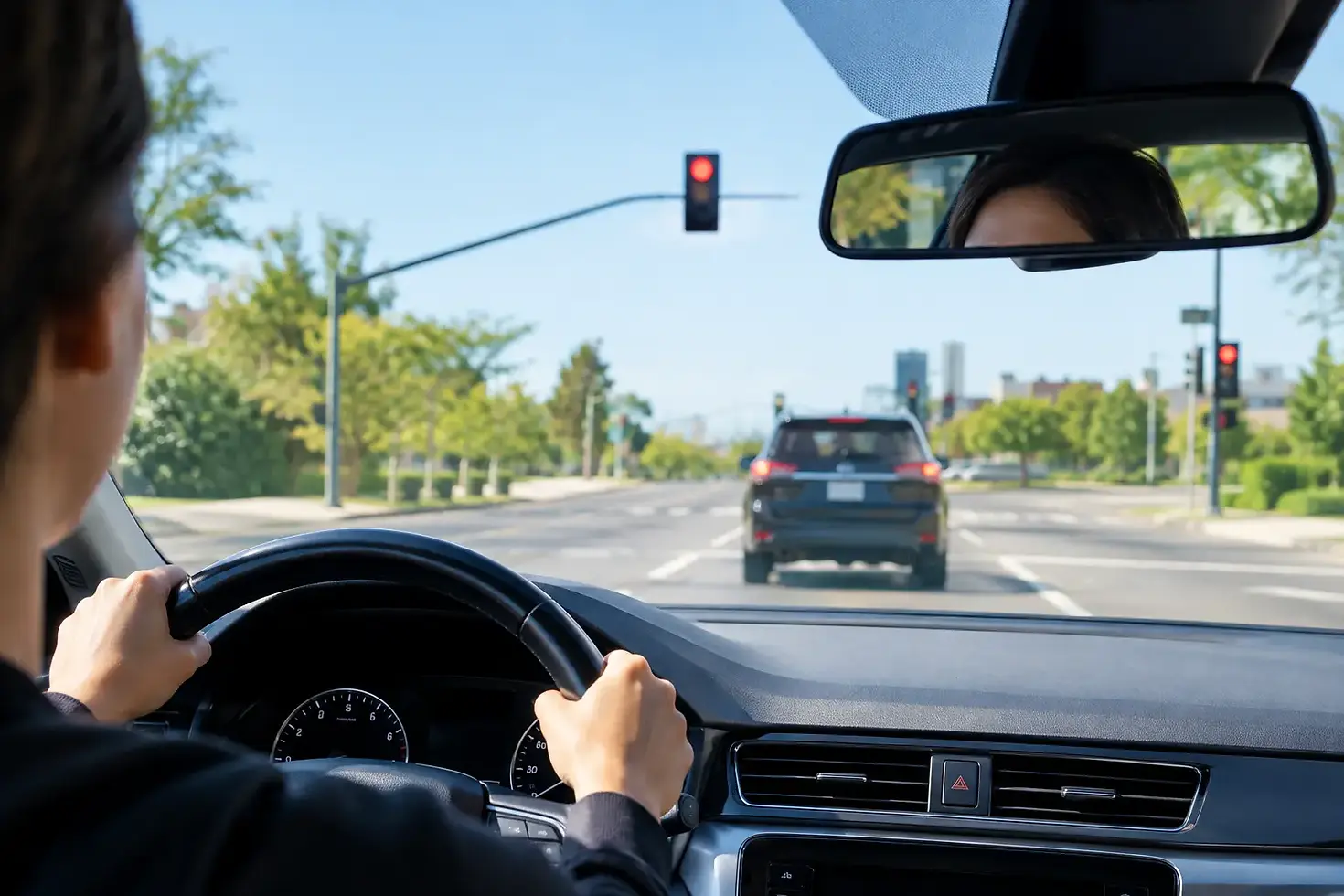
Approaching Traffic Lights Safely on Every Drive

A green light can change before you reach it. That simple fact is why approaching traffic lights safely is not about reacting at the last second. It is about looking well ahead, easing into the right speed early and giving yourself enough space to make a calm decision.
For learner drivers around Leongatha, Korumburra, Wonthaggi and Inverloch, traffic lights may feel straightforward at first. They become more demanding when there is rain on the windscreen, a vehicle close behind, pedestrians waiting to cross or unfamiliar city traffic moving in several lanes. Building a safe routine now makes both everyday driving and the VicRoads driving test feel far less stressful.
Read the intersection before you reach it
Start looking well ahead as soon as you can see the traffic lights. Notice the signal colour, but also look at the traffic flow, vehicles waiting to turn, marked lanes, pedestrian crossings and any vehicles already in the intersection. A green light means you may proceed if the intersection is clear. It does not guarantee that every other road user will stop or give way correctly.
As you get closer, check your mirrors and identify what is behind you. This is particularly useful when the light has been green for a while. You are not trying to predict the exact moment it will change. You are preparing for the possibility that you may need to stop.
A useful habit is to think, “What will I do if the lights change now?” If your answer is that you would need to brake sharply, you are probably travelling too quickly or following too closely for the situation.
Use an early, gentle slowdown
When a red light is visible ahead, come off the accelerator early and brake progressively. Early braking gives drivers behind you a clear warning through your brake lights and helps keep your stop smooth. It also gives you time to check mirrors and stay balanced in your lane.
Avoid rushing up to a red light only to brake hard at the stop line. Apart from being uncomfortable for passengers, late braking can be risky on wet roads, loose gravel or roads with poor grip. In South Gippsland, changing weather and country-road surfaces can make that extra stopping distance particularly valuable.
Stop behind the white stop line. If there is no line, stop before the pedestrian crossing. Keep the front of your vehicle clear of the crossing so people using it have a safe, visible path.
Making the right call at an amber light
Amber lights are where many learners feel pressured. The rule is simple in principle: stop at an amber light unless you cannot stop safely. The difficult part is developing the judgement to know what is safe before you are too close.
If you have been scanning ahead and travelling at a sensible speed, you will usually have time to brake smoothly. Do not accelerate to “make it through” because the light has turned amber. That decision can take you into the intersection as the signal turns red, and it leaves little room for an unexpected pedestrian, cyclist or turning vehicle.
There are occasions when a sudden stop would create more danger, such as when you are already very close to the stop line and braking hard could cause a loss of control or a collision from behind. In that case, continue through only if the intersection is clear. This is not a reason to follow closely or rely on the car behind you. Your own speed, road conditions and distance from the lights should guide your decision.
The best approach is preventative: leave enough space, reduce speed early when needed and make your choice before the amber light appears.
Position your vehicle for the movement ahead
Good lane position makes traffic lights easier to manage. Check signs and road markings early so you are in the correct lane well before the intersection. Sudden lane changes near lights can surprise other drivers and distract you from the signal, pedestrians and vehicles ahead.
If you are turning, indicate in plenty of time and check mirrors before moving into position. At a right turn, keep your wheels straight while waiting in the intersection unless you are actively turning. If you are hit from behind with your wheels turned, your vehicle could be pushed into oncoming traffic.
When turning left, slow down and carefully check for pedestrians, bicycles and mobility scooters at the crossing. A green light or green arrow does not remove your responsibility to give way where required. Take a moment to look properly rather than assuming the crossing is empty.
Stay alert when the light turns green
When your light turns green, do not move automatically. First check that the intersection is clear. Look for a vehicle finishing a turn, a late road user clearing the crossing or someone who has not stopped for their red light. This pause should be brief, but it is a smart safety habit.
Then move off smoothly. Check your mirrors before braking or moving, and use the accelerator gently so you stay in control. If the vehicle in front does not move immediately, leave space rather than sounding the horn straight away. They may be checking the intersection, waiting for a pedestrian or simply need a moment to select the right gear.
At intersections with green arrows, follow the direction of the arrow and continue to watch for hazards. Signals manage traffic movements, but safe driving still depends on observation.
Give yourself extra room in difficult conditions
Traffic lights need more planning at night, in rain and in busy Melbourne traffic. Wet roads increase braking distance, glare can make signals and brake lights harder to see, and heavy traffic may block your view of the stop line. Slow down earlier and increase the gap to the vehicle ahead.
In Melbourne, you may also need to deal with multiple lanes, trams, cyclists and pedestrians entering crossings after the signal changes. Keep your attention moving between the lights, your lane, mirrors and the space ahead. Trying to make up time by rushing an amber light is never worth it.
In smaller towns, do not let quieter roads make you less observant. A familiar intersection in Leongatha or Wonthaggi can still contain a distracted driver, a child on a bike or a vehicle turning across your path. Safe routines matter whether there are ten cars around you or none.
What driving assessors are looking for
During a VicRoads practical driving test, an assessor is not expecting perfect guesses about traffic light changes. They are looking for safe, legal and controlled decisions. That means you should show clear observation, appropriate speed, smooth braking, correct lane position and awareness of other road users.
A hard stop when there was plenty of room to slow down can suggest that you were not looking far enough ahead. Accelerating through amber when you could have stopped safely can be more serious. The aim is not to be overly cautious and hold up traffic. It is to drive predictably, make decisions early and remain in control.
Nervous drivers sometimes focus so closely on the signal that they forget mirror checks and surrounding traffic. Practise saying the routine quietly in your head: look ahead, check mirrors, ease off, brake if needed, stop behind the line. With repetition, it becomes natural rather than something you have to remember under pressure.
Practise where confidence can grow
Start on quieter intersections where you can concentrate on the sequence without feeling rushed. Once that feels comfortable, practise busier lights, right turns, pedestrian crossings and intersections on wet days with an experienced supervising driver. Each setting teaches a slightly different skill.
A professional lesson can also help turn uncertainty into a clear routine. South Gippsland Driving Lessons can work with learners and nervous drivers on local intersections before building confidence in more complex Melbourne traffic. The goal is not just getting through one set of lights. It is learning to read the road early enough that every decision feels calm, controlled and safe.
The next time you see lights ahead, give yourself time. A little more space and a little earlier planning can make the whole intersection easier for you, your passengers and everyone sharing the road.


Comments