

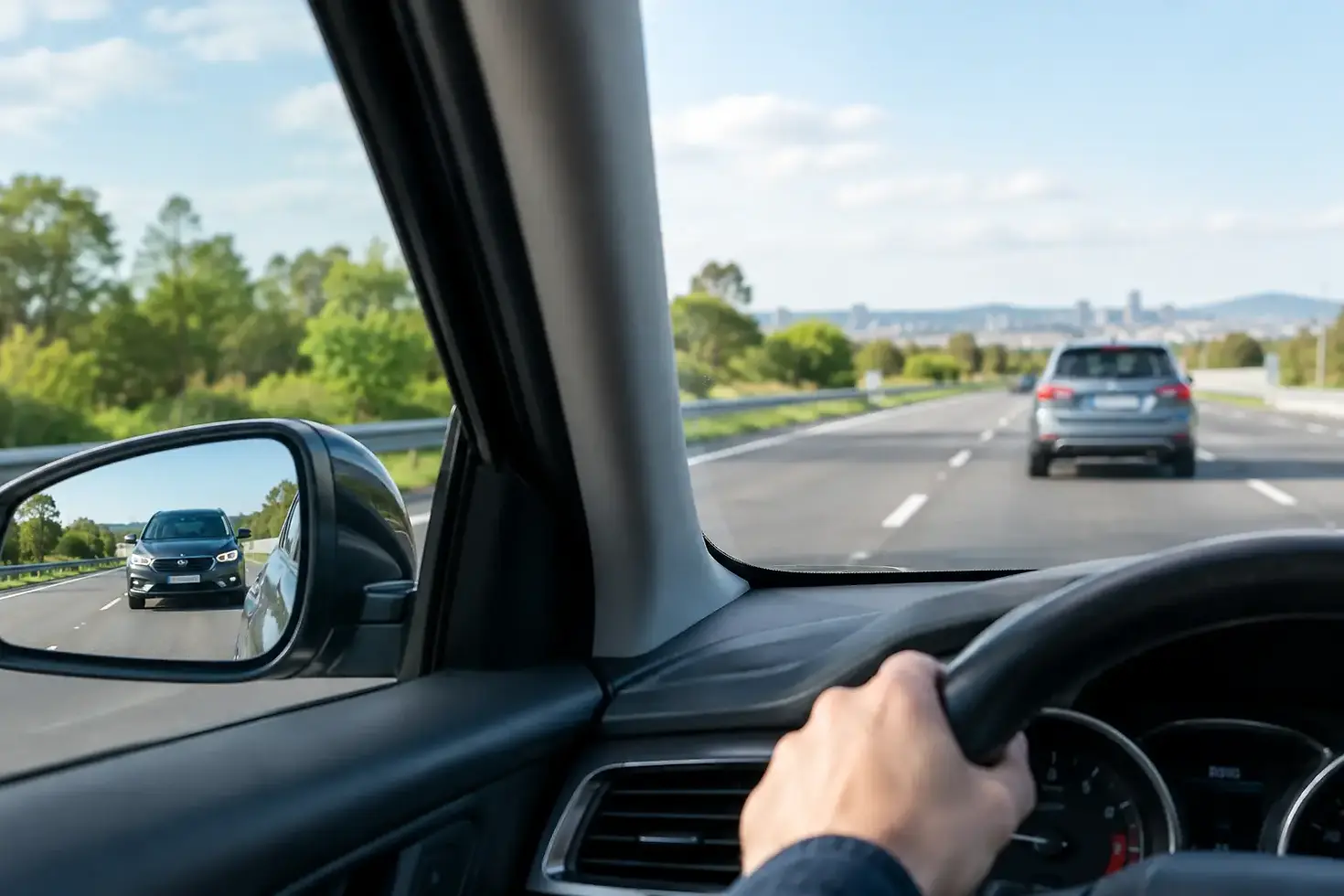
Safe Lane Changing Technique for Victorian Drivers

A lane change can feel simple on a quiet road near Leongatha, then suddenly feel like a big decision when traffic is moving quickly through Melbourne. A safe lane changing technique gives you a repeatable routine, so you are not guessing, rushing or relying on one quick glance in the mirror.
For learner drivers, this is a skill that matters well beyond the VicRoads driving test. Knowing how to change lanes calmly helps you join traffic, follow signs, prepare for turns and cope with busy roads without putting pressure on yourself or other drivers.
Why lane changes need more than a mirror check
Your mirrors give you a useful picture of what is behind and beside your car, but they do not show everything. Every vehicle has blind spots, particularly alongside the rear corners. A car, motorbike, cyclist or even a larger vehicle can be close enough to matter while still not appearing in your mirrors.
A good lane change is also about timing. You need enough space in the lane you are entering, enough time to complete the move gradually, and a clear reason for changing lanes. If the gap is not there, the safest choice is to stay where you are and try again later. Missing a turn or taking the next exit is always better than forcing your way across.
This is especially relevant for nervous drivers. Feeling pressured by traffic behind you can make you look for a gap that is too small. Other drivers may be impatient, but they do not get to decide whether a lane change is safe. Your first job is to make a controlled decision.
The safe lane changing technique: a simple routine
A reliable lane change follows the same order every time: plan, mirror, signal, check, move and cancel. Practising this sequence until it feels natural makes a major difference in both regional driving and city traffic.
Plan before you need the lane
Look well ahead for road signs, lane arrows, merging traffic and parked vehicles. If you know you will need the right lane for an upcoming turn, begin preparing early rather than waiting until the last moment.
Planning ahead is particularly useful in unfamiliar Melbourne streets, where several lanes, trams, buses and turning traffic can make late decisions difficult. On South Gippsland roads, planning may mean noticing a slower vehicle, a turning lane or roadworks early enough to choose a safe gap without abrupt braking.
Keep a steady speed where possible. Speeding up sharply to get into a gap, or slowing suddenly while other vehicles are close behind, can create a new risk. Adjust smoothly and give yourself time.
Check your mirrors and signal clearly
Start with the interior mirror, then the side mirror in the direction you want to move. This tells you what traffic is approaching from behind and whether there may be space in the next lane.
Signal before moving so other road users understand your intention. A signal is not permission to change lanes. It is communication. You still need to make sure the lane is clear and that another driver has not begun moving into the same space.
Keep the indicator on long enough for others to see it, but do not signal so early that it could confuse people at an intersection or driveway. For example, if you are passing several side streets before your turn, signal when your move is genuinely about to happen.
Do a head check for the blind spot
After checking your mirrors and signalling, quickly turn your head and look over the shoulder towards the lane you are entering. This is your blind-spot check, often called a head check. Keep it brief. Your eyes must return to the road ahead straight away.
A head check is essential before every lane change, including when you believe the lane is empty. Motorbikes and bicycles can be difficult to spot, and another vehicle may have moved into the blind spot between your mirror check and your lane change.
Avoid a long stare over your shoulder. At 60 km/h or 80 km/h, the road ahead can change quickly. The check should be purposeful: look, confirm the space is clear, then bring your attention back in front of the vehicle.
Move gradually, then cancel the signal
When the lane is clear, steer smoothly across the lane line. There should be no sudden swerve and no need to brake hard. Maintain a safe following distance from the vehicle ahead in your new lane.
Once you are fully within the lane, cancel the indicator if it has not cancelled automatically. Continue scanning ahead. A lane change is only finished when your car is settled in the new lane and you are again focused on traffic conditions in front of you.
Choosing a safe gap
There is no single gap size that suits every situation. It depends on the speed of traffic, weather, road surface, visibility and the type of vehicles around you. A gap that feels comfortable at 40 km/h may be far too small at 100 km/h.
As a general guide, you should be able to enter the lane without causing the vehicle behind to brake sharply or change speed suddenly. You also need a safe following distance from the vehicle in front. If you have to squeeze between two vehicles, the gap is not suitable.
Be particularly patient around trucks, buses and utes towing trailers. These vehicles may need extra room to brake and can block your view of smaller road users. Do not sit beside a large vehicle for longer than necessary, and never move into a space you cannot see clearly.
Wet roads, glare from a low sun, fog and night driving all reduce the margin for error. In these conditions, allow more room and make earlier decisions. Waiting for a larger gap is sensible driving, not hesitation.
Lane changes on South Gippsland roads and in Melbourne
Local roads around Korumburra, Wonthaggi and Inverloch can be quieter than Melbourne, but quieter does not mean risk-free. Road surfaces may change, driveways and side roads can appear unexpectedly, and drivers may travel at higher speeds. A lane change to overtake should only happen where you have a clear view, legal road markings and enough distance to complete the manoeuvre safely.
Never cross continuous dividing lines to overtake, and do not begin an overtake if you cannot see far enough ahead. On country roads, it is often safer to remain behind a slower vehicle until a proper overtaking opportunity appears.
In Melbourne traffic, lane changes often happen because a lane ends, a sign directs you to a particular lane, or traffic is queuing for a turn. Stay alert for motorbikes filtering through traffic and cyclists near the kerb. Watch for trams, buses pulling away from stops and passengers opening car doors in busy streets.
If you are preparing for city driving, practise first in moderate traffic. Build up from quiet multi-lane roads to busier routes. Confidence comes from repeating good decisions, not from putting yourself into the hardest situation too soon.
What assessors look for in a VicRoads driving test
During a driving test, an assessor is looking for safe observation, good judgement and control. They want to see that you check mirrors, signal when needed, complete a head check and move only when it is safe.
One common mistake is treating the head check as a performance for the assessor rather than a real safety check. Your check should happen at the right time and in the correct direction because you are looking for hazards, not simply ticking off a step.
Another mistake is changing lanes too late. If you realise you are not in the correct lane, stay calm. Continue safely, follow the road and let the assessor give further directions. A safe wrong turn is much better than an unsafe last-second lane change.
Build the habit in every lesson
The best way to make lane changing feel less stressful is to practise the routine in different conditions. Begin on quieter roads, then work towards busier traffic, higher speeds and unfamiliar routes. Say the steps quietly to yourself if it helps: mirrors, signal, head check, move.
It can also help to discuss each decision after you make it. Why was that gap safe? What did you see in the side mirror? Was there a cyclist, parked car or turning vehicle that changed the plan? This turns driving practice into understanding, rather than simply repeating an action.
South Gippsland Driving Lessons can help learners and nervous licensed drivers practise these decisions at a comfortable pace, including preparation for the VicRoads test and more complex Melbourne driving.
A calm lane change is never about being the quickest driver on the road. It is about seeing clearly, allowing enough space and being comfortable enough to wait when the safe option is not there.



Comments