

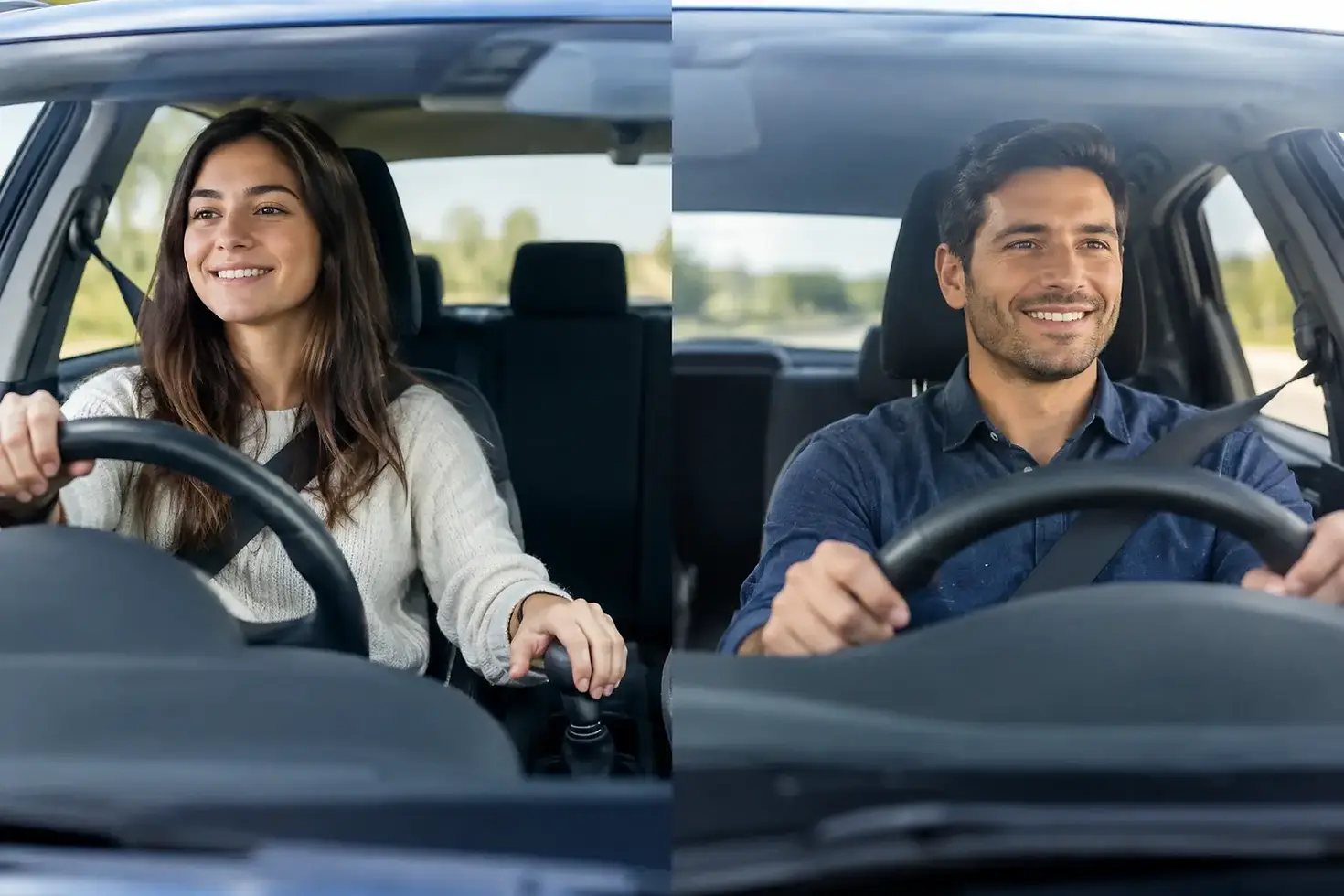
Manual Automatic Lessons: Which One Suits You?

A hill start in Leongatha, a busy roundabout in Wonthaggi or a trip towards Melbourne can feel very different depending on the car you are learning in. Manual automatic lessons are not about choosing the easier option or the harder one. They are about choosing the vehicle that suits your goals, confidence and the driving you expect to do after you get your licence.
For some learners, a manual car is part of a future job, family vehicle or country lifestyle. For others, an automatic gives them the extra mental space they need to focus on road position, traffic and safe decisions. Both can help you become a capable driver when your lessons are planned around your needs.
Manual automatic lessons: what changes?
The main difference is how you control the car. In a manual, you use a clutch pedal and gear stick to select the right gear for moving off, building speed, slowing down and climbing hills. An automatic changes gears for you, so you use two pedals and can keep more attention on steering, scanning and responding to traffic.
Neither type of lesson removes the need to learn the essentials. You still need to check mirrors, indicate correctly, give way, manage gaps, keep a safe following distance and read the road ahead. You will still need to practise three-point turns, reverse parallel parking and the observation routines expected in a VicRoads driving test.
The difference is where your attention goes in the early stages. A learner in a manual is developing coordination between clutch, accelerator and gears. A learner in an automatic can often concentrate sooner on traffic awareness and vehicle placement. That can be especially reassuring for a nervous first-time driver, but it does not mean automatic driving is careless or effortless. Good automatic drivers are still active, alert and prepared.
When manual lessons may be the right choice
Manual lessons are worth considering if you want the broadest choice of vehicles after you are licensed. Passing your practical driving test in a manual generally allows you to drive both manual and automatic vehicles, subject to the usual licence conditions. This can be useful if your family has a manual car, you may need to drive a work ute, or you simply want flexibility later on.
Manual driving also teaches a strong sense of how a car responds. You learn to select a suitable gear before a hill, reduce speed smoothly before a bend and use engine braking where appropriate. On South Gippsland roads, where conditions can change from town streets to open roads, that awareness can be valuable.
There is a learning curve, particularly with hill starts and moving off smoothly in traffic. Stalling is common while you are learning and is not a sign that you cannot drive. It is simply a skill that improves with calm repetition. A patient instructor will break the process into manageable steps, starting in quieter streets before building up to busier routes.
Manual may not be the best starting point if managing the clutch is causing so much stress that you cannot safely take in what is happening around you. It is fine to take your time, and it is also fine to choose a different path.
Manual driving can suit learners who
Manual can be a practical choice for learners who expect to use different vehicles, are comfortable with a little extra practice and want a wider range of options after their test. It can also suit learners who enjoy being more involved in the mechanics of driving.
However, the goal is never to choose manual simply because someone says you should. Your licence should lead to safe, independent driving, not months of pressure in a vehicle that does not suit your circumstances.
When automatic lessons may be the right choice
Automatic lessons can help learners make progress quickly because there is less to coordinate when moving off and slowing down. This leaves more attention for the parts of driving that often feel demanding at first: judging gaps at roundabouts, approaching intersections, keeping a steady position in the lane and noticing pedestrians near crossings.
They are a particularly sensible choice if your household vehicle is automatic and that is what you will drive most often. There is no benefit in making practice difficult by learning in a car you will rarely use after you are licensed.
Automatic lessons can also be a good fit for people returning to driving after a long break. A licensed driver who feels anxious about Melbourne traffic may find that an automatic lets them focus on lane changes, tram zones, hook turns where relevant and busy multi-lane intersections without also worrying about clutch control.
If you pass the practical driving test in an automatic, your Victorian probationary licence will generally be restricted to automatic vehicles. You can later sit another approved driving test in a manual if you want to remove that restriction. Licence rules can change, so it is always sensible to check current VicRoads requirements before booking your test.
Automatic does not mean fewer skills
An automatic car can make gear changes simpler, but it still requires thoughtful driving. You need to avoid creeping too close in slow traffic, brake smoothly, select the right gear setting when parking and stay alert on long country drives. It is also important not to rely on the car to make decisions for you.
A good lesson will build your confidence without rushing you. You may begin with quiet streets around Leongatha or Korumburra, then move towards more complex situations when you are ready. The right pace is one that challenges you safely while allowing time to practise each skill properly.
Think about the driving you will really do
The best choice is often found by looking ahead six to twelve months. Consider the car available for practice, the vehicle you are likely to use once you have your Ps and whether you need manual driving for work or family reasons. These practical details matter more than what your friends are learning in.
A learner in Inverloch who will mostly drive an automatic family car may benefit from automatic lessons and plenty of practice in local traffic, car parks and changing coastal conditions. Someone in a farming family near Korumburra who may need to drive manual vehicles could decide that learning clutch control is a worthwhile investment.
It is also worth considering your test preparation. The car you use for the VicRoads practical driving test should be one you know well. You should understand its controls, mirrors, indicators, demisters, parking brake and how it responds at low speed. Familiarity helps reduce nerves on the day.
Building confidence before the VicRoads test
Your driving test is a chance to show that you can make safe, consistent decisions on the road. It is not a demand for perfection. Learners often put pressure on themselves to complete every manoeuvre flawlessly, but safe observation, sensible speed and calm correction matter far more than trying to impress anyone.
Whether you choose manual or automatic, practise the situations that make you hesitate. That might be entering a roundabout, reverse parking near a kerb, starting on a slope or joining faster traffic. Repeating those situations with clear feedback turns uncertainty into a routine.
Professional lessons can be especially helpful when practice with family is limited or when everyone is busy. South Gippsland Driving Lessons can work around school, work, sport and music commitments, giving learners regular time behind the wheel rather than leaving practice to chance. Lessons can also prepare school leavers and newly licensed drivers for the extra demands of city driving in Melbourne.
You can change direction if needed
Choosing one transmission now does not lock you into every future driving decision. Some learners start in manual, decide they need more confidence in an automatic and change course. Others gain their automatic licence first, then return for manual training later when work or vehicle access makes it useful.
What matters is being honest about where you are up to. If a manual lesson feels challenging, that can be a normal and productive part of learning. If it feels overwhelming every time, talk it through with your instructor. The answer may be more practice, a slower progression or an automatic vehicle that lets you focus on the road.
Your first aim is to become a safe, confident driver who can handle everyday trips without panic or pressure. Choose the transmission that helps you build those habits, practise consistently, and give yourself permission to learn one calm drive at a time.


Comments